Queensland storm season has a way of exposing weak points that go unnoticed for most of the year. A garage door can look fine in calm weather, open and close every day without drama, and still become a serious vulnerability when severe storms or cyclones arrive. That matters because once a garage door fails, wind can enter the house more easily and increase damage to roofs and walls. In practical terms, the garage door is not just a moving panel at the front of the home. It is part of the building envelope, and before storm season, it deserves the same attention people usually give to roofs, gutters, and outdoor furniture.
I have found that many homeowners think about the garage only as a place to park the car or store tools. During storm preparation, it needs to be treated more like a structural opening that must hold up under pressure. That shift in thinking changes the whole maintenance conversation. It moves the focus away from cosmetic issues and toward wind rating, safe operation, component wear, access during power loss, and whether the door is genuinely fit for Queensland conditions.
Why the garage door deserves priority
Garage doors are large openings by design. They rely on multiple components working together, including the curtain or panels, garage door tracks, hinges, fixings, garage door springs, and garage door openers. If one part is worn, loose, or unsuitable, the system can become the weak point during severe weather.
Queensland guidance places specific emphasis on garage doors in cyclone preparation. A garage door should comply with AS/NZS 4505 and be correctly rated for wind pressure, or it should have a bracing system that can be installed before a cyclone. That is not a minor technical detail. It is the difference between a door that is expected to perform under storm conditions and one that may not.
This is also where homeowners sometimes make an expensive mistake. They spend time tidying the yard and taping windows, but ignore an older garage door because it still opens reliably on dry days. Reliability in fair weather does not prove storm readiness. A smooth motor and a working remote do not tell you whether the door or frame is compliant, wind rated, or structurally sound enough for a major weather event.
Start with the question that matters most
Before checking rollers or lubricating anything, ask one straightforward question: is this door suitable for the level of wind exposure my property may face?
For some homes, the answer is already on record through product documentation or past installation paperwork. For many others, especially older homes, the answer is less clear. If you cannot confirm that the garage door complies with the relevant standard or has an appropriate bracing system, that uncertainty should not be brushed aside. Queensland housing guidance identifies replacing existing garage doors and frames with wind rated versions as part of household resilience work, and it specifically notes that non compliant garage doors can be a cost effective replacement target to improve cyclone resilience.
That point is worth slowing down on. Not every maintenance issue can be solved with servicing. Sometimes the sensible decision is garage door replacement. If the existing door and frame are not suited to storm conditions, no amount of routine adjustment turns them into a wind rated assembly. Servicing can keep a suitable door working properly. It cannot change an unsuitable door into a compliant one.
Maintenance is not just lubrication
People often reduce garage door maintenance to a quick spray on the moving parts. That kind of shortcut can create a false sense of security. Proper pre season maintenance is broader than that. It is partly mechanical, partly operational, and partly about planning for severe weather.
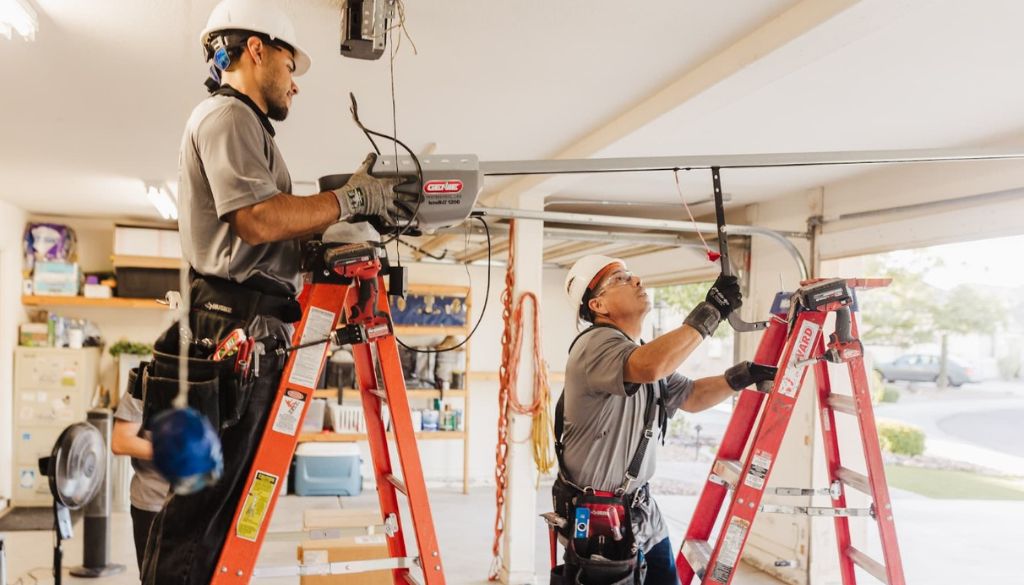
The mechanical side begins with condition. Look at the door when it is closed, and again when it is fully open if it can be done safely. Does it sit squarely in the opening? Are the garage door tracks visibly secure? Are there garage door resource signs of movement around the frame? Does anything look bent, loose, or misaligned? Even without making technical claims beyond what can be verified, it is reasonable to say that visible deterioration or poor fit should not be ignored heading into storm season.
The operational side is just as important. If the door hesitates, shudders, makes new noises, or occasionally reverses for no obvious reason, that is not the time for guesswork. A storm preparation mindset is different from everyday tolerance. Many households put up with minor garage door quirks for months because the door still basically works. Before storm season, “basically works” is not a good standard.
The planning side is where many homes improve quickly. Queensland storm guidance advises securing loose outdoor items, parking vehicles under shelter if possible, and unplugging electrical items. The garage sits right in the middle of all three. It can be shelter for vehicles, a storage space for items that would become dangerous in high winds, and a location where electrical equipment such as garage door openers and chargers should be considered before a storm arrives.
The components that usually need attention
A garage door system ages unevenly. One part can remain sound while another begins to wear or loosen. That is why broad visual checks are useful, but targeted attention matters too.
Garage door springs are a common source of concern because they carry a lot of the working load in normal operation. If there is obvious wear, corrosion, damage, or unreliable movement, that is not a do it yourself moment. Springs store force, and storm season preparation is not the time to take risks with high tension components. The same judgment applies to cables, brackets, and any fixing that appears compromised. Queensland guidance on home preparation repeatedly points people toward working safely or using a qualified contractor for securing vulnerable parts of the home. The garage door clearly belongs in that category when structural or high tension components are involved.
Garage door tracks deserve careful attention as well. People tend to notice tracks only when the door jams, but a pre season check is about catching issues before they become urgent. Tracks should appear firmly fixed and free from obvious distortion. If the door has taken knocks from bikes, bins, or a reversing vehicle over the years, even small bends can matter. A door that does not travel cleanly in calm conditions should not be trusted when conditions worsen.
Garage door openers create a different kind of vulnerability. They are electrical devices attached to a door that may need to be secured before severe weather or accessed during a power outage. Queensland guidance recommends unplugging electrical items as part of storm preparation, which makes it sensible to think through how the opener will be managed. If the opener is unplugged, can the door still be operated safely as needed? Are remotes and manual access methods organised, or will someone be figuring it out in the dark with rain arriving sideways? A few minutes of planning here can spare a lot of stress later.
What to inspect before the first major warning
A practical inspection does not have to be complicated, but it should be deliberate. If anything appears unsafe, stop and arrange professional help rather than forcing the issue.
- Confirm whether the garage door is wind rated, compliant with the relevant standard, or fitted with a bracing system intended for cyclone preparation. Check the door, frame, and garage door tracks for obvious movement, looseness, bending, or poor alignment. Test operation in calm weather so any issues with garage door openers, remotes, or manual access are discovered early. Clear and secure items stored near the opening so the garage can be used quickly for sheltered parking and storm preparation. Review whether older or non compliant doors should be considered for garage door replacement rather than another short term repair.
That list looks simple, but each point pulls weight. Most serious problems I see around storm preparation come from uncertainty rather than total neglect. The owner is not sure whether the door is rated, not sure whether a brace exists, not sure whether the opener will be usable if power is cut, and not sure whether a sticking track is a nuisance or a warning sign. The safest time to resolve that uncertainty is well before the weather bureau starts naming systems.
When a repair is enough, and when replacement is smarter
This is where experience matters. Some doors need maintenance, adjustment, or isolated repairs. https://goldcoastgaragedoorrepair.com.au/southport-qld/ Others have reached the point where repairs only delay an inevitable upgrade. The difficult part is that both scenarios can look similar from the driveway.
If the existing door is structurally appropriate, correctly rated, and generally in sound condition, maintenance may be all that is needed to keep it dependable. That can include dealing with operational faults, ensuring the tracks and fittings are sound, and confirming the opener is functioning properly. There is value in that work, especially when it restores reliable use before storm season.
But if the door is non compliant, lacks proper wind rating for the property’s needs, or relies on an arrangement that no one can verify, garage door replacement becomes a resilience decision rather than a cosmetic one. Queensland housing guidance directly supports replacing existing garage doors and frames with wind rated versions as part of resilience work. In some households, that is one of the more cost effective ways to reduce vulnerability at a major opening in the home.
There is also a timing issue. Replacing a questionable garage door in the middle of storm season can be far more stressful than dealing with it early. Contractors get busy, stock can vary, and households are more likely to rush decisions under pressure. Planning in advance usually leads to better choices and cleaner installation.
The attached garage changes the stakes
An attached garage raises another set of considerations because the garage door affects more than just vehicle storage. If the garage adjoins living areas, the door opening becomes part of the home’s broader performance in both storms and everyday comfort.
Australian energy guidance notes that draught stoppers at the base of doors can help reduce heat loss. For an attached garage, draught proofing and fit at the base of the door can matter for comfort and energy use. That does not turn the garage door into a storm barrier on its own, but it is one of those practical details that improves the day to day function of the space while you are already assessing the door. Homeowners often appreciate upgrades more when they solve two problems at once, resilience and comfort.
That said, it is important not to confuse weather sealing with storm hardening. A better bottom seal may help with draughts. It is not a substitute for a properly rated door, a sound frame, or a required bracing system. These improvements sit in different categories, and mixing them up leads to poor decisions.
Bracing systems and what people get wrong about them
Where a garage door relies on a bracing system for cyclone preparation, the critical issue is not just whether the system exists. It is whether the household can install it correctly before a cyclone, and whether the parts are complete, accessible, and in usable condition.
A surprising number of households have braces stored somewhere in the garage but have not touched them in years. The hardware may be separated, instructions may be missing, or boxes may be buried behind old paint tins and camping gear. A bracing system that cannot be found or installed quickly is not much use when warnings escalate.
This is one area where a dry run makes sense. Not an improvised experiment during dangerous weather, but a calm day check to confirm where the brace is, how it fits, and whether anything about the process needs professional attention. If there is uncertainty, resolve it early. Queensland guidance is clear that preparation should happen before storm season and before severe weather arrives.
The storm week routine that prevents last minute trouble
When a severe weather event is forecast, the garage often becomes command central for the household. Cars are moved under cover, outdoor items are packed away, ladders come out, power boards are unplugged, and everyone suddenly needs the door to function properly. That is exactly why maintenance cannot wait until the warning stage.
A sensible storm week routine usually looks like this:
- Park vehicles under shelter if possible, using the garage efficiently rather than leaving the space cluttered. Secure loose items from the yard and move them into the garage only if they can be stored safely and without obstructing the door. Unplug electrical items where appropriate, including considering the setup for garage door openers. Make sure remotes, keys, and any manual release arrangements are known to the household. Once conditions become dangerous, stay inside and only go outside again when it is officially safe.
That final point matters. Queensland guidance is very clear that people should only go outside after it is officially safe. If a garage door develops a fault during the event, that is not a reason to step into hazardous conditions. Pre season work reduces risk precisely because post failure fixes during a storm may not be safe at all.
Choosing professional help with the right priorities
Not every contractor approaches garage doors through a storm resilience lens. Some focus mainly on convenience, appearance, or everyday performance. Those are valid concerns, but before Queensland storm season, you want someone who understands the door as part of the home’s protective shell.
The right conversation is rarely just, “Can you make it quieter?” It is more often, “Can you tell me whether this door is suitable, whether the frame and fittings are sound, whether the bracing arrangement is correct, and whether repair or garage door replacement is the better call?” That kind of assessment cuts through a lot of guesswork.
It is also where homeowners benefit from being honest about the age and history of the door. If a panel was hit years ago, if the track was bent and pushed back, or if the opener has intermittent issues after heavy rain, say so. Small pieces of history often explain what a quick visual check cannot.
A few signs that should not be ignored
There are some situations where caution should overrule convenience. A door that is visibly out of square, a frame that looks loose, a track that is bent, a brace that is missing, or a system whose rating cannot be confirmed should all be treated seriously before storm season. The same goes for damaged garage door springs or unreliable garage door openers. None of these are good candidates for last minute improvisation.
People sometimes hope that because the door has survived previous storms, it will be fine again. That is understandable, but not especially reliable as a planning method. Past survival does not confirm present suitability. Components age, fixings loosen, and building standards evolve. A door that escaped trouble in one season may still be a poor risk in the next.
The larger point homeowners often miss
Storm preparation is usually framed around dramatic tasks, sandbags, shutters, generators, roof checks. The garage door is less dramatic, but it is often more consequential than people realise. It is a large opening, used constantly, exposed to wear, and deeply tied to both household routine and structural resilience.
Handled well, garage door maintenance before Queensland storm season is not complicated. It is a matter of asking the right questions early, dealing with uncertainty before weather pressure builds, and being honest about whether the current door is fit for purpose. Sometimes that means straightforward servicing. Sometimes it means confirming the bracing system is ready. Sometimes it means garage door replacement because the old system is no longer the right answer.
The best outcomes usually come from acting before the first real warning, while there is time to inspect properly, engage a qualified contractor if needed, and make calm decisions. When storm season arrives, that preparation pays off quietly. The door closes firmly, the garage is ready, the car is under cover, loose items are secured, and one of the home’s biggest openings is no longer an afterthought.