A garage door opener tends to be ignored when it works and blamed for everything when it does not. That is understandable. The opener is the part people notice because it responds to the remote, drives the door, and controls daily access in and out of the garage. Yet in practice, opener problems are often tied to the condition of the whole system, including springs, alignment, hardware, and the door itself.
That distinction matters. A homeowner may search for garage door opener repair when the real problem is poor balance, worn components, or garage door alignment that has shifted enough to affect travel. In other cases, the opener really is the issue, particularly when a motor has reached the end of its service life or the system no longer works reliably with remotes. The right fix depends on careful diagnosis, not guesswork.
In coastal areas such as the Gold Coast, that judgment becomes even more important. Salt air, humidity, and heat can accelerate wear on garage door hardware and increase maintenance needs. A door that performed well a few years ago can start behaving differently as corrosion, swelling, or gradual hardware fatigue change how the system moves. When a garage door not closing properly becomes a regular annoyance, the opener may be part of the story, but it is rarely the only thing worth inspecting.
What the opener actually does, and what it does not
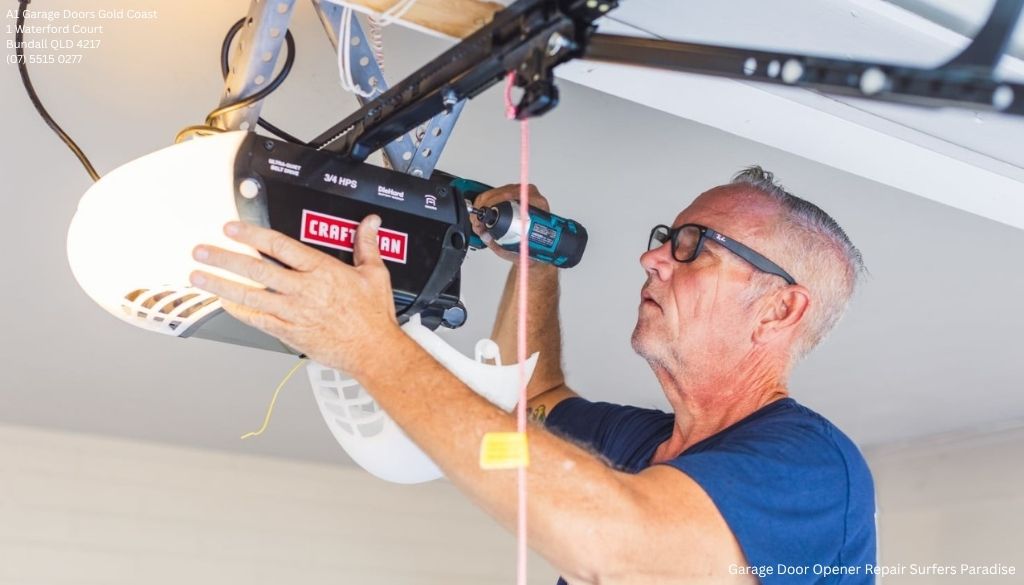
People often talk about the opener as if it lifts the entire weight of the door by itself. In a healthy system, that is not really the job. The opener controls movement and provides the force to open and close, but the door’s balance is strongly influenced by its spring system. When springs are in good condition and correctly matched, the opener does not have to struggle. When springs wear out or break, the opener can be forced to work harder than it was meant to.
That is one reason experienced technicians look beyond the motor when a customer wants to fix garage door problems. If the door has become heavy, jerky, or unreliable, replacing the opener alone may not solve anything for long. It can even mask a more serious mechanical issue until another failure happens.
Spring work deserves special caution. Springs are under high tension and are dangerous to adjust or repair without proper training and tools. That is not a minor warning. It is one of the clearest lines between safe homeowner maintenance and work that should be handled by a qualified professional. If a spring breaks, many service providers recommend replacing both springs rather than only one, because they usually wear at a similar rate and mismatched springs can create balance problems.
The first signs that something is off
Most opener and door issues start subtly. A delay in response. A rough sound that was not there last month. A door that reaches the floor and then reverses. These early changes are useful because they often appear before a complete breakdown.
A few common warning signs are worth paying attention to:
The door opens or closes unevenly, or seems to hesitate during travel. The motor runs, but the door does not move as smoothly as it used to. The door starts going down, then stops or reverses before fully closing. Remotes work inconsistently, even after basic checks. The system becomes noticeably louder, especially if the sound is new.
Each of those symptoms can point in more than one direction. A https://goldcoastgaragedoorrepair.com.au/southport-qld/ garage door not closing properly may involve the opener, but it can also indicate a mechanical or alignment issue somewhere in the track or hardware. A motor that sounds strained may be failing, or it may be reacting to a door that is no longer balanced. The pattern matters. So does the timing. A problem that appears only during hot weather or after a stretch of wet, humid conditions can hint at environmental effects rather than a sudden electrical fault.
Why doors go out of alignment
Garage door alignment is one of those phrases people hear often but do not always understand. Alignment is not limited to whether the door looks straight from across the driveway. It includes how the door tracks, whether hardware is sitting where it should, and whether the system moves through its full travel without binding or twisting.
A slight shift can produce surprisingly stubborn symptoms. The opener may still receive the signal and try to do its job, but the door resists movement. That resistance can show up as slow travel, uneven closing, or repeated reversals. In day to day use, many homeowners interpret that as an opener fault because the motor is the active part they can hear. In reality, the opener may be reacting to the added strain.
On the Gold Coast, environmental exposure adds another layer. Salt air and humidity can affect metal hardware over time. Heat also changes how materials behave. Those local conditions help explain why regular servicing is often more valuable than people expect. A system that is checked before small wear turns into sticking or misalignment usually costs less to maintain than one left alone until it fails.
Repair or replacement, the real decision points
There is no single rule that answers whether garage door opener repair or replacement is the better choice. The right answer depends on what has failed, how the rest of the system is performing, and whether the opener is still a good match for the door.
A repair makes sense when the opener itself remains fundamentally sound and the issue is isolated. In many service markets, including the Gold Coast, technicians commonly handle repairs and replacement of components such as motors and remotes. That means the system can often be restored without replacing everything. If the door is otherwise in good condition and the fault is limited, targeted work is usually the practical route.
Replacement becomes more reasonable when the opener is no longer reliable, when repeated issues suggest broader wear, or when an automation upgrade for an existing garage door is the better long term option. That upgrade path is widely offered by garage door businesses, which reflects a common real world scenario: the door itself may still be serviceable while the operator no longer meets the owner’s needs.
The important thing is not to decide based only on the latest symptom. A remote problem does not always call for a new opener. A failing motor does not automatically mean the whole door system needs to be rebuilt. Reliable access comes from matching the fix to the true source of trouble.
When an opener problem is really a door problem
This is where homeowners often lose time and money. They hear the motor, see the door misbehaving, and assume the opener is defective. Sometimes that is correct. Often, it is incomplete.
A door that is dragging, out of balance, or affected by worn springs can make even a good opener look bad. The same goes for hardware affected by corrosion or general wear. On a coastal property, where salt air and humidity are part of normal life, it is not unusual for a door system to age unevenly. One component may still function while another has degraded enough to cause strain throughout the system.
That is why a proper inspection matters. Not a quick glance at the remote, but a full look at how the door travels, how the motor responds, and whether the system is behaving consistently. In my experience, the most expensive garage door repair decisions are often the ones made too quickly. Replacing a motor before checking the rest of the assembly can leave the original cause untouched. Then the homeowner is left with a new opener and the same old problem.
What professional service commonly covers
Garage door companies in the Gold Coast area commonly offer repairs, servicing, installations, and replacement of parts such as motors, remotes, and springs. That range of work is useful because opener issues do not always stay neatly in one category. A service call may begin as a motor complaint and turn into a spring diagnosis, or start as a request to fix garage door access and end with an automation upgrade recommendation.
A typical visit may involve checking how the door opens and closes, identifying whether the problem sits with the opener or another component, and deciding whether repair, servicing, or replacement is the most dependable option. The best outcomes usually come from treating the door as a system rather than as a stack of unrelated parts.
That systems approach also helps avoid repeat failures. If a motor is replaced but a balance issue remains, the new unit may be exposed to the same stress that damaged the old one. If remotes are replaced without addressing inconsistent door travel, the owner may still feel like the system is unreliable. Reliable access is not just about making the door move once. It is about restoring normal, repeatable function.
The danger zone homeowners should not enter
There are small checks a homeowner can make, such as noting patterns, listening for new noises, or observing whether the door is closing evenly. Those observations are genuinely helpful because they give a technician a better starting point. But some parts of garage door work should not be treated as weekend projects.
Spring repair sits at the top of that list. Springs are under high tension, and that stored energy makes them dangerous to adjust or replace without the right training and tools. If a spring has broken, the safest decision is to stop using the door until it is assessed. Since both springs generally wear in similar ways, replacing both may be recommended to avoid creating a mismatch that leads to poor balance.
That advice can feel frustrating when only one spring has obviously failed, but it reflects how garage doors actually behave in service. A balanced system matters. A piecemeal fix on a heavily worn assembly can create new issues even if it gets the door moving again for a short time.
Maintenance is less dramatic than repair, and more valuable
Annual servicing does not have much glamour, but it often makes the difference between a dependable opener and a breakdown at the worst possible time. At least one Gold Coast garage door business recommends professional servicing every 12 months to help prevent breakdowns and extend the life of both the door and the motor. That recommendation fits what many technicians see in the field. Minor wear caught early tends to stay minor. Wear ignored through another season of heat and humidity often does not.
Servicing is especially sensible where coastal conditions are part of daily life. Salt air and moisture do not need a dramatic storm to do their work. They affect hardware gradually, then all at once, when a once smooth door starts binding or a once quiet opener starts straining.
For homeowners trying to get the most life out of their system, a simple mindset helps: do not wait for total failure before paying attention. Garage doors usually give warnings. The question is whether anyone acts on them.
A useful annual service mindset includes:
Have the full door and opener system checked, not just the motor. Mention any recent changes in sound, speed, or closing behavior. Ask whether local salt air, humidity, or heat is affecting exposed hardware. If a spring issue is found, discuss whether both springs should be replaced. Treat recurring minor faults as a reason to inspect, not just reset and ignore.That kind of maintenance conversation is far more productive than asking only, “Can you make it work again today?” A quick fix may restore access for the moment, but good servicing aims to reduce the chance of the same problem returning next month.
Replacement can be an upgrade, not just a last resort
People sometimes hear the word replacement and assume it means failure, waste, or unnecessary expense. In many garages, replacement is simply the sensible next phase. If an older opener is inconsistent, if remotes are becoming part of a pattern of frustration, or if the owner wants to automate an existing garage door that was not previously set up that way, a replacement or installation can improve reliability in a very practical sense.
That said, replacement should still be tied to real need. It is easy to oversimplify and say new is always better. It is not. A replacement opener installed on a door with unresolved garage door alignment or spring issues may deliver little benefit. On the other hand, a suitable new motor fitted to a well maintained door can restore ease of use and reduce day to day aggravation.
The best replacement decisions usually happen when someone steps back and looks at the full picture. Is the current opener the only weak link, or is it one of several aging parts? Has the problem been isolated, or has the system become generally unreliable? Is the owner trying to preserve an otherwise solid setup, or has the garage reached the point where broader updating makes more sense?
A common scenario that causes confusion
One of the most common calls in garage door service is the door that starts down, pauses, and then refuses to close properly. The homeowner often frames it as an opener issue because the opener is visible and active. Sometimes they have already tried the remote several times, perhaps even assuming the signal is weak or the motor is failing.
Yet that same symptom can come from misalignment, drag in the system, or a balance problem linked to wear elsewhere. This is exactly why diagnosis matters more than labels. “Garage door opener repair” may be the phrase used when booking the service, but the true repair may involve something mechanical rather than electronic. Getting that distinction garage door resource right saves time and usually leads to a more durable fix.
I have seen versions of this pattern across many home systems, not just garage doors. The component people interact with becomes the suspect, while the supporting parts that shape its performance are overlooked. With garage doors, that mistake is especially common because the opener seems like the brain of the operation. In reality, it is only as reliable as the door system it is asked to control.
How to talk to a technician and get a better outcome
The quality of the service call often improves when the homeowner can describe the behavior clearly. That does not mean using technical language. It means being specific about what changed and when. If the door has become louder over several weeks, say that. If the problem appears mostly in hot weather, mention it. If the motor sounds normal but the door movement seems uneven, that detail helps.
Those observations matter more than trying to diagnose the fault yourself. They guide the inspection toward patterns that may point to opener wear, environmental effects, spring trouble, or garage door alignment concerns. In service work, the details that seem minor to a homeowner are often the clues that shorten the path to the right repair.
It also helps to ask one practical question: is the opener failing on its own, or is it struggling because another part of the door system needs attention? That question gets to the heart of reliable access. The goal is not merely to restart the door today. It is to understand what the system needs so it can keep working consistently.
Reliable access comes from treating the system as a whole
A garage door opener is an important convenience, but it is only one part of a larger mechanism. When the door stops behaving properly, the most reliable response is to look at the relationship between the motor, the springs, the hardware, and the alignment of the door itself. Repairs and replacement both have their place. So do regular servicing and timely attention to early warning signs.
In the Gold Coast and similar coastal environments, maintenance matters even more because salt air, humidity, and heat can increase wear on hardware and shorten the time between smooth operation and obvious trouble. That local reality does not mean every problem is severe. It does mean small symptoms are worth taking seriously.
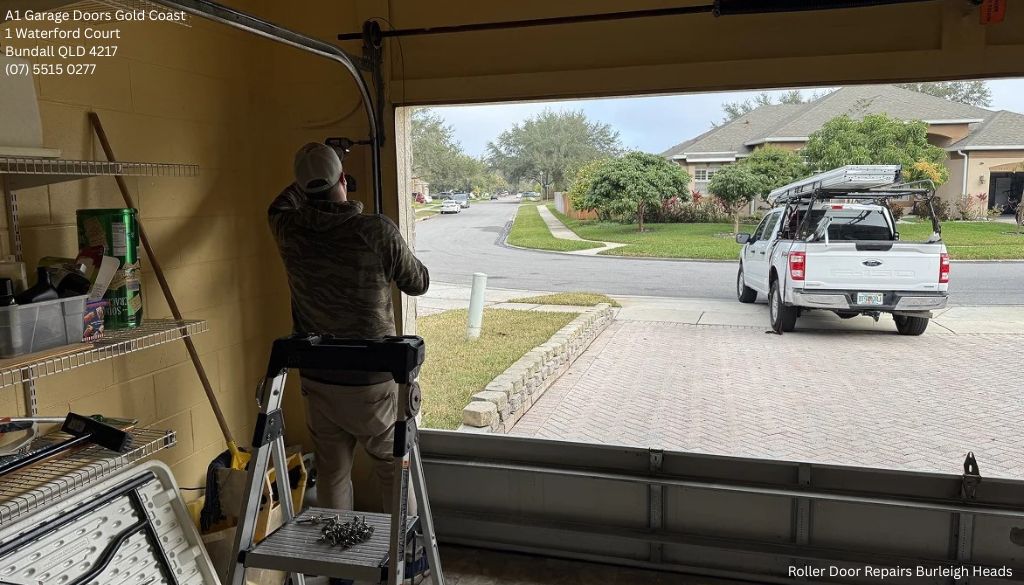
Whether the answer turns out to be garage door opener repair, motor replacement, spring work, a remote issue, or a broader effort to fix garage door performance, the best result is usually the one grounded in careful inspection. That is how a garage door not closing properly becomes a solved problem rather than an ongoing irritation, and how a simple service call turns into long term reliable access instead of another temporary patch.